Turning Passive Presence into Active Engagement
Most business websites exist as digital billboards. They display a logo, list services, post an address, and sit passively waiting for traffic. But in an overcrowded marketplace, simply being visible isn't enough.
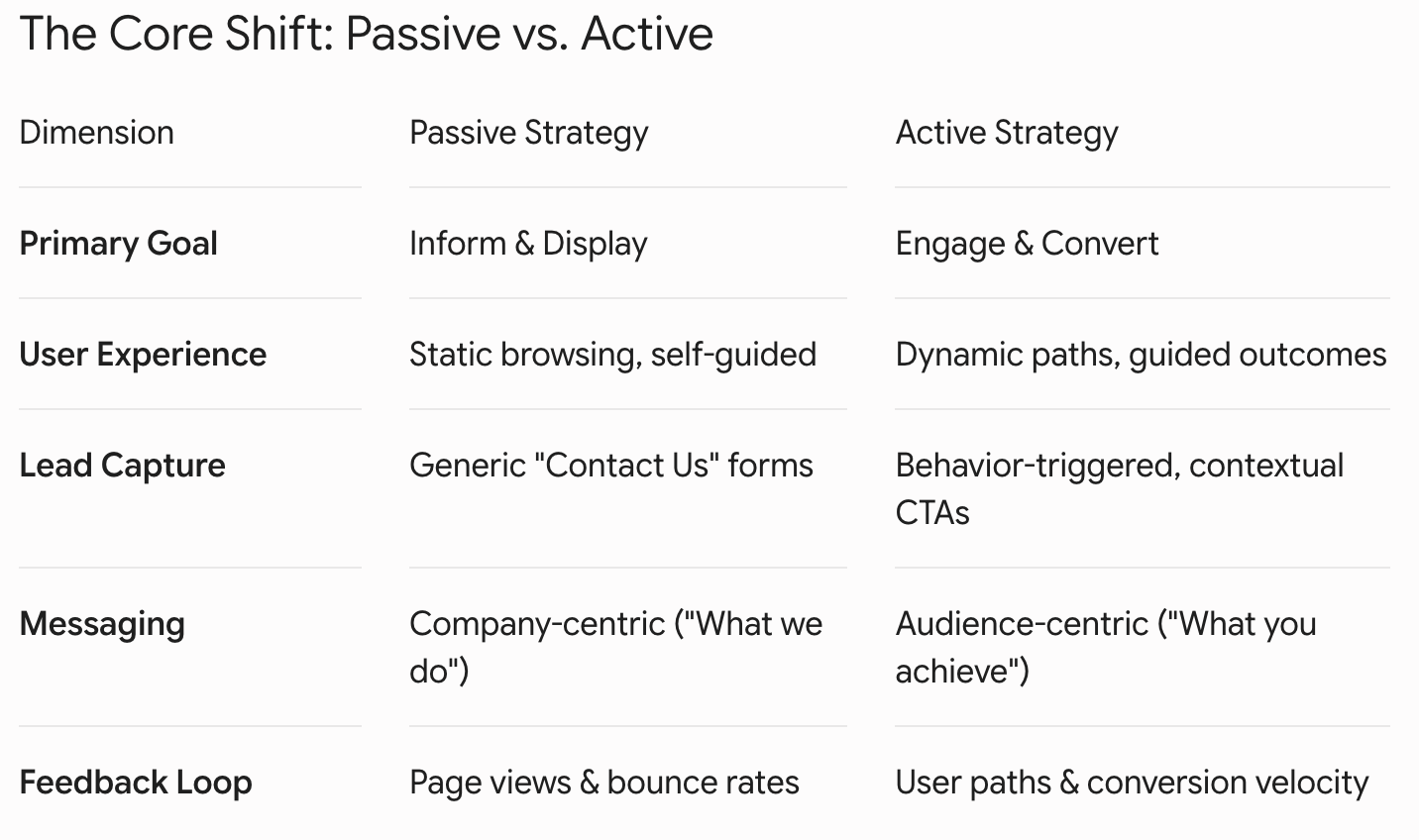
Moving from a passive online footprint to an active growth strategy requires a shift in perspective: stopping the treatment of web assets as static brochures and starting to use them as dynamic engagement engines.
1. Transforming Static Content into Dynamic Journeys
A passive website presents information and hopes the visitor figures out what to do next. An active strategy actively guides the user through a tailored experience based on their intent.
Map Intent to Action: Replace broad navigation with intent-focused entry points. A visitor looking for immediate solutions needs a direct line to booking or consultation, not an enterprise bio.
Integrate Real-Time Engagement: Introduce low-friction interactive elements—such as self-assessment tools, live chat, or interactive pricing calculators—that capture attention before a bounce occurs.
Streamline the Conversion Funnel: Minimize steps between initial interest and explicit action. Every additional form field or extra click introduces friction that reduces conversion rates.
2. Leveraging Audience Understanding for Automation
True audience understanding isn't about guessing buyer personas; it's about paying attention to digital behavior and building automated systems that respond in real time.
Behavior-Based Segmentation: Track which services, articles, or resources a visitor explores. Categorize prospects by their specific pain points rather than lumping them into a single email list.
Contextual Follow-Up: Build automated drip sequences that trigger based on exact user actions. If a visitor downloads a guide on web strategy, their follow-up should deliver immediate, actionable strategy insights—not a generic company newsletter.
Value-First Nurturing: Position every automated touchpoint as a value delivery mechanism. Show prospects that you understand their operational challenges before asking for a sales conversation.
3. Shifting from Intuition to Data-Driven Evolution
An active digital presence is never "done." It is constantly tested, measured, and refined based on real-world user interactions.
Audit Navigation Friction: Regularly review user paths using analytics and heatmap data to identify where high-intent visitors drop off.
A/B Test Key Touchpoints: Continuously test headlines, call-to-action placement, and form designs to optimize conversion rates incrementally over time.
Align Metrics with Revenue: Move past vanity metrics like raw traffic volume. Focus on metrics that indicate active health: conversion rates, lead quality, pipeline contribution, and customer acquisition efficiency.